

Tilawat
Longest Verse in Quran Ayat Al Dayn (Surah Baqarah v 282) - Eng & Urdu Translation
by Mishary Rashid Alafasy
Audio Details
Important Notes About This Audio
Ayat al-Dayn (The Verse of Debt) with English & Urdu Translation
This is the longest verse in the Qur’an, famously called the verse of debt or Ayat al Dayn. It is the 282nd verse of Surah Baqarah the second and the longest chapter of the Holy Quran.
The Verse of Debt focuses on one very practical area of life: financial dealings, documentation, and justice. It teaches how to protect rights, avoid disputes, and build trust in society.
Arabic Text
سورۃ البقرہ – آیت 282
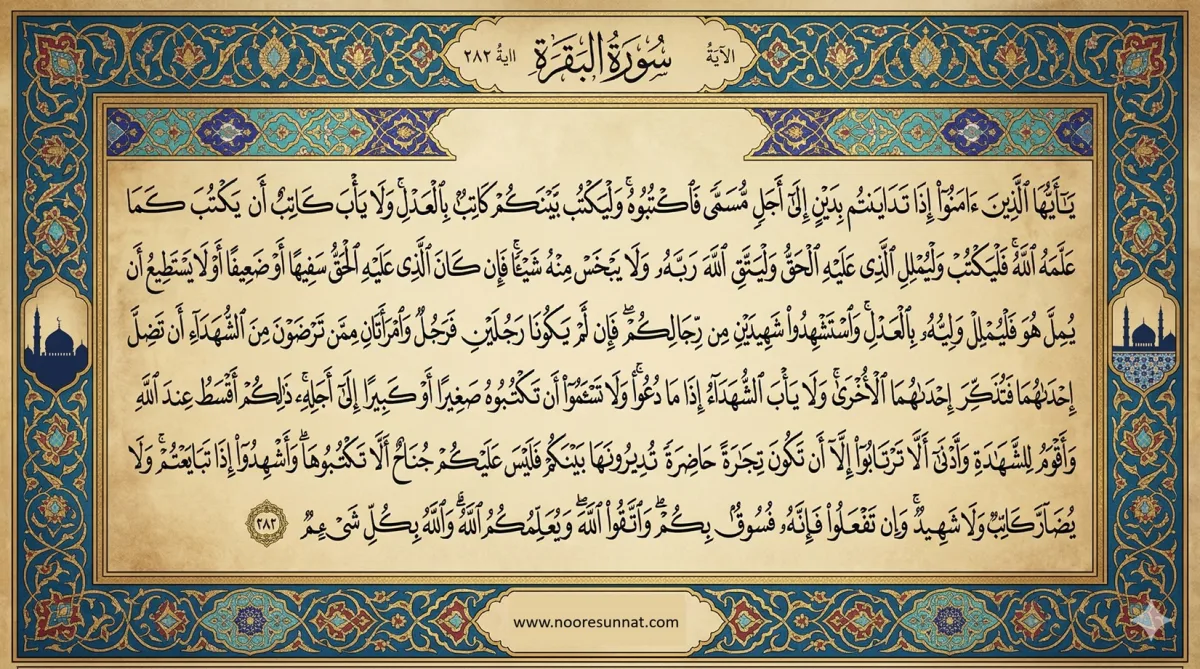
يَا أَيُّهَا الَّذِينَ آمَنُوا إِذَا تَدَايَنتُم بِدَيْنٍ إِلَىٰ أَجَلٍ مُّسَمًّى فَاكْتُبُوهُ ۚ وَلْيَكْتُب بَّيْنَكُمْ كَاتِبٌ بِالْعَدْلِ ۚ وَلَا يَأْبَ كَاتِبٌ أَن يَكْتُبَ كَمَا عَلَّمَهُ اللَّهُ ۚ فَلْيَكْتُبْ ۚ وَلْيُمْلِلِ الَّذِي عَلَيْهِ الْحَقُّ وَلْيَتَّقِ اللَّهَ رَبَّهُ وَلَا يَبْخَسْ مِنْهُ شَيْئًا ۚ فَإِن كَانَ الَّذِي عَلَيْهِ الْحَقُّ سَفِيهًا أَوْ ضَعِيفًا أَوْ لَا يَسْتَطِيعُ أَن يُمِلَّ هُوَ فَلْيُمْلِلْ وَلِيُّهُ بِالْعَدْلِ ۚ وَاسْتَشْهِدُوا شَهِيدَيْنِ مِن رِّجَالِكُمْ ۖ فَإِن لَّمْ يَكُونَا رَجُلَيْنِ فَرَجُلٌ وَامْرَأَتَانِ مِمَّن تَرْضَوْنَ مِنَ الشُّهَدَاءِ أَن تَضِلَّ إِحْدَاهُمَا فَتُذَكِّرَ إِحْدَاهُمَا الْأُخْرَىٰ ۚ وَلَا يَأْبَ الشُّهَدَاءُ إِذَا مَا دُعُوا ۚ وَلَا تَسْأَمُوا أَن تَكْتُبُوهُ صَغِيرًا أَوْ كَبِيرًا إِلَىٰ أَجَلِهِ ۚ ذَٰلِكُمْ أَقْسَطُ عِندَ اللَّهِ وَأَقْوَمُ لِلشَّهَادَةِ وَأَدْنَىٰ أَلَّا تَرْتَابُوا ۖ إِلَّا أَن تَكُونَ تِجَارَةً حَاضِرَةً تُدِيرُونَهَا بَيْنَكُمْ فَلَيْسَ عَلَيْكُمْ جُنَاحٌ أَلَّا تَكْتُبُوهَا ۗ وَأَشْهِدُوا إِذَا تَبَايَعْتُمْ ۚ وَلَا يُضَارَّ كَاتِبٌ وَلَا شَهِيدٌ ۚ وَإِن تَفْعَلُوا فَإِنَّهُ فُسُوقٌ بِكُمْ ۗ وَاتَّقُوا اللَّهَ ۖ وَيُعَلِّمُكُمُ اللَّهُ ۗ وَاللَّهُ بِكُلِّ شَيْءٍ عَلِيمٌ
Transliteration
Ya ayyuhallazina amanu iza tadayantum bidaynin ila ajalim musamman faktubuh; walyaktub baynakum katibum bil adl; wala ya’ba katibun an yaktuba kama ‘allamahullah; falyaktub; walyumlil-lazi ‘alayhil haqq walyattaqillaha rabbahu wala yabkhas minhu shai’a. Fa in kanallazi ‘alayhil haqq safihan aw da’ifan aw la yastati’u an yumilla huwa falyumlil waliyyuhu bil adl. Wastashhidu shahidayni mir rijalikum; fa illam yakuna rajulayni farajulun wamra’atan mimman tardawna minash shuhada’i an tadilla ihdahuma fatuzakkira ihdahumal ukhra. Wala ya’bash shuhada’u iza ma du’u; wala tas’amu an taktubuhu saghiran aw kabiran ila ajalih. Zalikum aqsatu ‘indallahi wa aqwamu lish shahadati wa adna alla tartabu. Illa an takuna tijaratan hadiratan tudirunaha baynakum falaysa ‘alaykum junahun alla taktubuha. Wa ashhidu iza tabaya’tum; wala yudarr katibun wala shahid; wa in taf’alu fa innahu fusooqun bikum; wattaqullah; wa yu’allimukumullah; wallahu bikulli shai’in ‘aleem.
English Translation
O believers, when you enter into a debt for a fixed time, write it down. Let a scribe write it between you with fairness. The scribe should not refuse to write as Allah has taught him. The debtor should dictate, fearing Allah, and not reduce anything.
If the debtor is weak, incapable, or unable to dictate, then his guardian should dictate fairly. Take two male witnesses; if two men are not available, then one man and two women so that if one forgets, the other reminds her.
Witnesses should not refuse when called. Do not hesitate to write down the debt, whether small or large, along with its due date. This is more just in the sight of Allah, stronger as evidence, and prevents doubt.
However, if it is a spot transaction, then there is no sin if you do not write it. But still, take witnesses. Do not harm the scribe or the witness. Fear Allah. Allah teaches you, and Allah knows everything.
Urdu Translation
اے ایمان والو! جب تم کسی مقررہ مدت تک کے لیے قرض کا لین دین کرو تو اسے لکھ لیا کرو، اور تمہارے درمیان کوئی لکھنے والا انصاف کے ساتھ لکھے۔ لکھنے والا انکار نہ کرے جیسا کہ اللہ نے اسے سکھایا ہے۔ جس پر حق ہے وہ خود لکھوائے اور اپنے رب اللہ سے ڈرے اور اس میں کچھ کمی نہ کرے۔
اگر مقروض ناسمجھ، کمزور یا خود لکھوانے کے قابل نہ ہو تو اس کا سرپرست انصاف کے ساتھ لکھوائے۔ اور اپنے مردوں میں سے دو گواہ بناؤ، اگر دو مرد نہ ہوں تو ایک مرد اور دو عورتیں، تاکہ اگر ایک بھول جائے تو دوسری اسے یاد دلائے۔
گواہ بلائے جائیں تو انکار نہ کریں، اور قرض کو خواہ چھوٹا ہو یا بڑا، اس کی مدت سمیت لکھنے میں سستی نہ کرو۔ یہ اللہ کے نزدیک زیادہ انصاف والی بات ہے، گواہی کے لیے زیادہ مضبوط ہے، اور شک سے بچانے والی ہے۔
ہاں اگر معاملہ نقد تجارت کا ہو تو نہ لکھنے میں کوئی گناہ نہیں، مگر خرید و فروخت کے وقت گواہ بنا لیا کرو۔ نہ لکھنے والے کو نقصان پہنچاؤ اور نہ گواہ کو۔ اللہ سے ڈرو، اور اللہ تمہیں سکھاتا ہے، اور اللہ ہر چیز کو جاننے والا ہے۔
The Ayat al-Dayn requires Muslims to:
- Write down every debt clearly (even if it's between blood relatives) including the amount and repayment time.
- Ensure the agreement is recorded fairly, with no hidden or altered terms.
- Have the debtor dictate the terms honestly, without reducing or hiding anything.
- Appoint a fair person to write the agreement if both parties are not writing it themselves.
- Provide a representative (guardian) if the debtor cannot explain or dictate properly.
- Bring reliable witnesses for the transaction (ideally two men, or one man and two women).
- Accept the responsibility of being a witness when called upon, and not refuse without valid reason.
- Document even small debts, not just large or formal transactions.
- Allow flexibility for immediate (cash) transactions, where writing is not required.
- Avoid harming or pressuring the writer or witnesses in any way.
- Maintain honesty and fear of Allah (taqwa) throughout the entire transaction.
- Structure financial dealings in a way that prevents doubt, disputes, and injustice.
Explanation And Message of Ayat Al Dayn (The Verse of Debt)
This ayah lays down a complete system for financial dealings. It teaches that Islam does not leave business matters vague. Instead, it gives clear instructions to protect both parties (even when the parties are blood relatives).
1. Write Everything Down
Even if you trust the other person, write the agreement. This removes confusion later. Many disputes today happen because people rely on memory instead of written proof.
2. Be Fair and Transparent
The scribe must write honestly. The debtor must not hide or reduce anything. This builds a culture of honesty in society.
3. Protect the Weak
If someone cannot explain their side properly (due to weakness, lack of knowledge, or inability), Islam ensures their rights are protected through a guardian.
4. Witnesses Add Strength
Witnesses are not about mistrust. They are about clarity and accountability. They support truth if a disagreement happens later.
5. Small or Large — Everything Matters
The ayah clearly says: do not ignore writing even small debts. This shows how Islam values discipline and precision in financial matters.
6. Ease in Daily Transactions
For small, immediate transactions (like buying something in cash), writing is not required. Islam keeps things practical and balanced.
The Significance of Ayat al-Dayn
1. Islam Promotes Financial Discipline
This ayah proves that Islam is not just about عبادات (worship), but also about real-world systems like contracts, trade, and accountability.
2. Prevents Disputes and Broken Relationships
Most family and business conflicts come from money issues. This ayah closes those gaps by removing ambiguity.
3. Builds Trust in Society
When people document and witness deals properly, trust increases across communities.
4. Protects Rights of All Parties
Both lender and borrower are protected. No one can cheat, forget, or manipulate terms later.
5. A Complete Economic Principle
Modern legal and financial systems emphasize documentation and contracts. This ayah already established that principle over 1400 years ago.
About the Scholar
Mishary Rashid Alafasy
Shaykh Mishari Rashid Al Afasy is one of the world\'s most popular Quran Reciters. His melodious voice and impeccable tajweed are perfect for any student of Quran looking to learn the correct recitation of the holy book. Our website has a dedicated Mishari Rashid Recitation page with the complete Quran. You can also listen to this recitation along with Urdu translation by Mufti Taqi Usmani.
Full Quran RecitationHave a question or thought about this bayan?
Leave a comment below. All comments are reviewed before appearing.
Related Reading
Popular by Mishary Rashid Alafasy
- Recitation Surah Fatiha 62,524 listeners
- Complete Ayat ul Kursi Audio Recitation With Urdu Hindi Translation 62,103 listeners
- Ayat e Karima Wazifa Audio - La Ilaha Illa Anta Subhanaka 59,541 listeners
- Recitation Surah Baqarah 40,410 listeners
- Surah Baqarah Last 2 Ayat Amana Rasul Urdu Translation-Audio MP3 25,549 listeners
- Recitation Surah Ya-Seen 21,991 listeners