

Audio Details
Important Notes About This Audio
Sayyid-ul-Istighfar (سید الاستغفار) with Translation
📖 Arabic Text
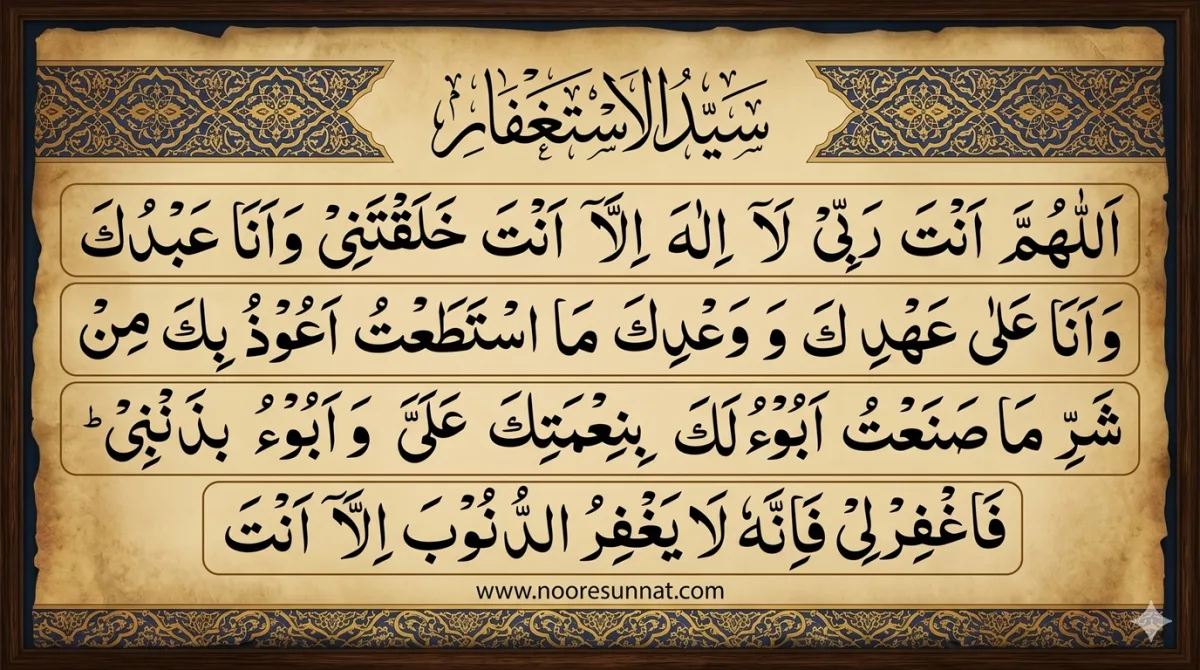
اللَّهُمَّ أَنْتَ رَبِّي، لَا إِلَهَ إِلَّا أَنْتَ، خَلَقْتَنِي وَأَنَا عَبْدُكَ، وَأَنَا عَلَى عَهْدِكَ وَوَعْدِكَ مَا اسْتَطَعْتُ، أَعُوذُ بِكَ مِنْ شَرِّ مَا صَنَعْتُ، أَبُوءُ لَكَ بِنِعْمَتِكَ عَلَيَّ، وَأَبُوءُ لَكَ
بِذَنْبِي، فَاغْفِرْ لِي، فَإِنَّهُ لَا يَغْفِرُ الذُّنُوبَ إِلَّا أَنْتَ
🔤 Transliteration
Allahumma anta rabbī, lā ilāha illā anta, khalaqtanī wa anā ‘abduka, wa anā ‘alā ‘ahdika wa wa‘dika mastata‘tu, a‘ūdhu bika min sharri mā ṣana‘tu, abū’u laka bini‘matika ‘alayya, wa abū’u laka bidhambī, faghfir lī, fa innahu lā yaghfirudh-dhunūba illā anta.
English Translation
“O Allah! You are my Lord. There is no god except You. You created me and I am Your servant. I remain faithful to Your covenant and promise as much as I can. I seek Your protection from the evil of what I have done. I acknowledge Your blessings upon me, and I confess my sins. So forgive me, for surely no one forgives sins except You.”
Urdu Translation
“اے اللہ! تو میرا رب ہے، تیرے سوا کوئی معبود نہیں۔ تو نے مجھے پیدا کیا اور میں تیرا بندہ ہوں۔ میں اپنی طاقت کے مطابق تیرے عہد اور وعدے پر قائم ہوں۔ میں اپنے اعمال کی برائی سے تیری پناہ مانگتا ہوں۔ میں تیری نعمتوں کا اقرار کرتا ہوں اور اپنے گناہوں کا بھی اعتراف کرتا ہوں، پس مجھے معاف فرما دے، کیونکہ تیرے سوا کوئی گناہوں کو معاف کرنے والا نہیں۔”
📚 Hadith Source
This dua is reported in Sahih al-Bukhari, where the Prophet ﷺ described it as the greatest form of seeking forgiveness.
He ﷺ said that whoever recites it in the morning with full conviction and dies before evening will be among the people of Jannah, and whoever recites it at night with conviction and dies before morning will also be among the people of Jannah.
Why is it called “Sayyid-ul-Istighfar”?
Scholars explain that this dua is called Sayyid (the leader) of all forms of istighfar because it gathers every essential element of true repentance in one place. It does not only ask for forgiveness. It builds a complete relationship between the servant and Allah.
The dua begins with pure tawheed. A person clearly declares that Allah alone is the Lord and there is no one worthy of worship besides Him. This sets the foundation, because forgiveness is only meaningful when it comes with correct belief.
Then the servant admits his position: “I am Your servant.” This line brings humility. It removes pride. A person accepts that he belongs to Allah and lives under His command.
After that, the dua expresses commitment. “I remain on Your covenant and promise as much as I can.” This shows that a believer is not just asking for forgiveness while continuing carelessly. He is trying, even if imperfectly, to stay loyal to Allah.
The next part shifts to self-reflection. The person seeks refuge from the evil of his own actions. This is powerful because instead of blaming circumstances or others, he recognizes that his own deeds are the source of harm.
Then comes a beautiful balance that scholars often highlight. The servant acknowledges Allah’s blessings and at the same time admits his sins. This combination is rare. Most people either focus only on guilt or only on blessings, but this dua combines both. It creates a state of humility, gratitude, and honesty all together.
Finally, the dua ends with a direct and sincere request for forgiveness, along with a firm belief that only Allah can forgive sins. This closes the loop of tawheed, humility, and hope.
Because this single dua contains belief, submission, commitment, self-accountability, gratitude, and a direct طلب مغفرت, scholars have called it the most complete and comprehensive form of istighfar. That is why it is known as Sayyid-ul-Istighfar.
Virtues of Sayyid-ul-Istighfar
The virtue of this dua is not ordinary. The Prophet ﷺ attached a clear promise to it. If a person recites it in the morning with full certainty and dies before evening, he will enter Jannah. The same applies if it is read at night and death comes before morning. This shows how powerful sincere istighfar can be.
It also acts as a daily renewal of faith. When a person reads it regularly, he reconnects with Allah every day. He reminds himself of his purpose, his mistakes, and his dependence on Allah’s mercy.
General Virtues of Istighfar
Istighfar is one of the most powerful acts in Islam. It is not limited to forgiveness alone. It changes a person’s life both spiritually and practically.
In the Qur’an, Allah mentions through the words of Prophet Nuh that seeking forgiveness brings rain, increases wealth, blesses children, and opens doors of provision.
In hadith, istighfar is described as a means of removing worries, easing hardships, and bringing رزق from places a person does not expect. It softens the heart and cleans it from the effects of sins.
Make it a habit to read Sayyid-ul-Istighfar once in the morning and once in the evening with attention and belief. Even though it is short, it carries the weight of a complete act of repentance.
Have a question or thought about this bayan?
Leave a comment below. All comments are reviewed before appearing.
Related Reading
Popular Audios
- Durood e Ibrahimi - The Best Darood Sharif (Urdu & Eng Translation) 124,509 listeners
- Eid ul Fitr & Adha Takbeer Full | Allahu Akbar Kabira MP3 Audio 112,501 listeners
- Hajj and Umrah Talbiyah - Labbaik Allahumma Labbaik Audio MP3 (Translation) 73,062 listeners
- Takbeer e Tashreeq Audio (9 to 13 Zul Hijjah) 24,170 listeners
- Dua for Anxiety, Depression, Debt Relief - Allahumma inni auzubika minal hammi wal hazan 22,478 listeners
- 4th (fourth) kalma audio with english and urdu translation 18,422 listeners